

Imbolc: Hearth Care, Returning Light, and the Quiet Work of Winter
TL;DR
Imbolc is one of the oldest seasonal observances in the Celtic world, rooted in the agricultural lives of early Ireland and Scotland.
Celebrated beginning the eve of January 31st - February 1st/ 2nd.
It marks a quiet turning point of the year: the return of milk, the stirring of the land, and the first promise of light.
Imbolc is traditionally associated with Brigid, keeper of the hearth, protector of healing, poetry, and craft.
This is not a festival of spectacle, but of tending—home, body, breath, and daily life.
Imbolc — A Quiet Turning of the Year
Imbolc is one of the oldest seasonal observances in the Celtic world, rooted deep in the agricultural lives of early Ireland and Scotland. Long before it was named a Pagan festival or placed on modern calendars, it marked a quiet but vital turning point of the year.
The lambing season began.
Ewes came into milk.
The ground, though still cold, was no longer asleep.
The name Imbolc is believed to come from Old Irish words linked to milk and the womb of the earth. This was not a festival of excess or spectacle. It was a festival of promise.
Winter still held its grip. Stores were thin. But the light had begun its slow return—and that was enough.
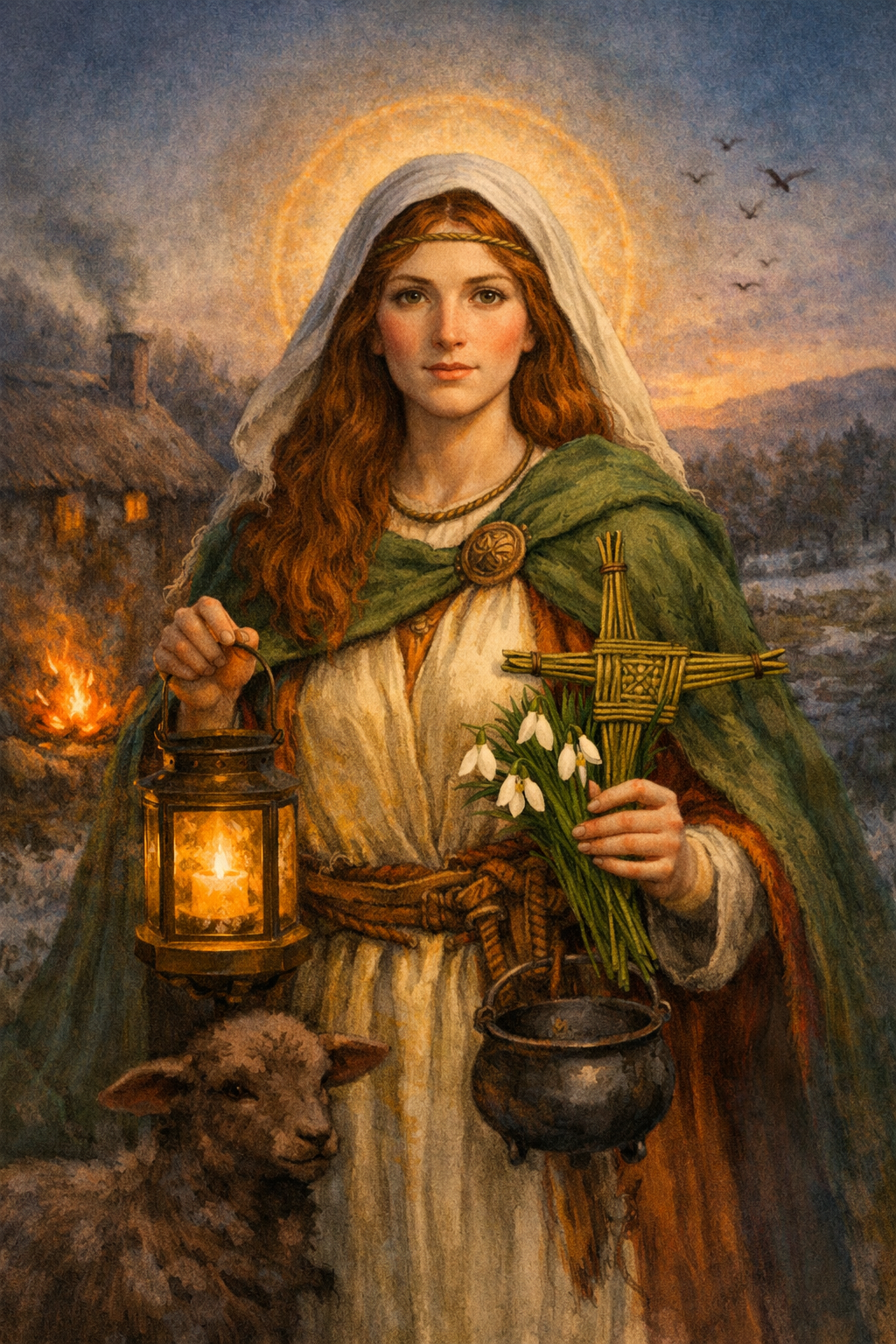
Brigid — Hearth, Healing, and the In‑Between
Imbolc is traditionally associated with Brigid, a goddess whose roots reach far deeper than sainthood. She was keeper of the hearth, protector of poets and smiths, and a healer.
Fire and water both belonged to her.
The steady flame that warms a home.
The quiet well that restores strength.
Imbolc lived in this in‑between space—where survival softened into hope.
Imbolc as a Way of Life
This is where Imbolc moves out of story and into lived experience.
Without naming it as such, many people find themselves living these rhythms instinctively—especially in winter, and especially when preparing for a baby to arrive or caring for themselves through a tender season.
In those moments, life naturally slows. Attention turns toward warmth, nourishment, and what needs tending close to home:
small, steady rituals that create a sense of safety,
caring for the home as a place of warmth and repair,
choosing simplicity, steadiness, and intention during the darkest part of the year.
Imbolc was never meant to be a single day or a perfectly curated altar. It was a rhythm carried through daily life. A way of relating to the season.
It reminded people that tending the hearth, cleaning with care, mending what’s worn, and quietly preparing for what’s to come were not small or mundane tasks. They were essential acts of care—how households survived winter and slowly made space for the return of light.
At its heart, this way of living is about choosing less in order to create more space.
Less noise.
Less obligation.
Less outward striving.
So that there can be more warmth, more rest, and more room for comfort.
From a yogic lens, this is the quiet work of tapas and svadhyaya. Not tapas as intensity or discipline, but as the steady inner warmth that conserves energy rather than depleting it. Not svadhyaya as self‑improvement, but as self‑listening—paying attention to what the body, the home, and the season are asking for.
The boundaries created at Imbolc were never strict rules. They were protective choices. Ways of tending the nest—of safeguarding energy, needs, and nervous systems so that life could continue to grow.
This is hearth care as devotion: creating a small, contained world of safety, nurture, and peace, where comfort is not indulgence, but medicine.
Leaving Something Out for Brigid
One of the oldest Imbolc customs is leaving something out for Brigid to bless—often a scarf, cloth, coat, or jumper. This is traditionally done on the night of January 31, allowing it to remain out overnight and be brought in on February 1, carrying a blessing of warmth, protection, and care through the coming months.
Some people leave out a white cloth. Others choose red or blue. Some call it a Bratach, many don’t. There is no right or wrong here—only different practices, shaped by place and family.
Over the years, the scarf has been one of the most common items left out. Examples of this practice appear across the country, from Donegal to Wexford, and from Offaly to Tipperary.
The belief is that as Brigid passes, she blesses the cloth, offering protection—especially for the throat—against colds in the coming months. In the past, red flannel was also used, with the belief that it protected the chest. There is notable crossover here with St. Blaise’s Day, which also centers on the blessing of the throat.
Coats and jumpers were—and still are—left out as well, particularly for children, with the same hope of protection against illness. Some people also believed these blessed items could help with headaches.
These traditions were practical, protective, and rooted in care. They reflect a deep understanding that the body, like the land, needs warmth and tending in order to thrive.
Simple Ways to Honor Imbolc
If you’d like to honor Imbolc in grounded, everyday ways, here are a few practices rooted in that older spirit:
Tend a flame. Light a candle or your hearth and sit with it for a few quiet moments. Not to ask for anything, but to honor endurance. You are still here. ***But if you are in a Fire Ban region, do this wisely with perhaps a small container candle***
Clean with intention. Choose one small space. As you clean it, think about what you’re gently preparing for—not forcing into being.
Work with water. Make tea, wash your hands slowly, or visit a stream or well. At Imbolc, water is about healing and renewal, not erasure.
Offer care at your threshold. A candle, a ribbon, a bit of bread. A welcome to the light as it returns.
Make a soft promise. Not a resolution—but a promise to tend your inner hearth as faithfully as you tend your home.
The Quiet Work Matters
Imbolc reminds us that growth begins long before it can be seen.
That quiet work matters.
That peace is built through daily choices, not grand gestures.
So if you’ve been lighting candles, tending your space, choosing warmth and steadiness—know this: you’ve already been walking the Imbolc path.
May your hearth stay warm,
your home feel held,
and your hopes take root beneath the frost.
Blessed Imbolc. 🌿🔥
This article is for educational purposes only and is not medical advice. Always consult your healthcare provider regarding questions about breastfeeding, nutrition, postpartum recovery, or your individual health. If you found this article helpful, you're welcome to share it. If you're sharing it with clients or students, please credit Anne Catherine Yoga. In the spirit of yoga, we practice both ahimsa (non-harming) and asteya (giving proper attribution to the work of others).
