
Diastasis Recti & Pelvic Floor Healing When Exercise Isn’t Working
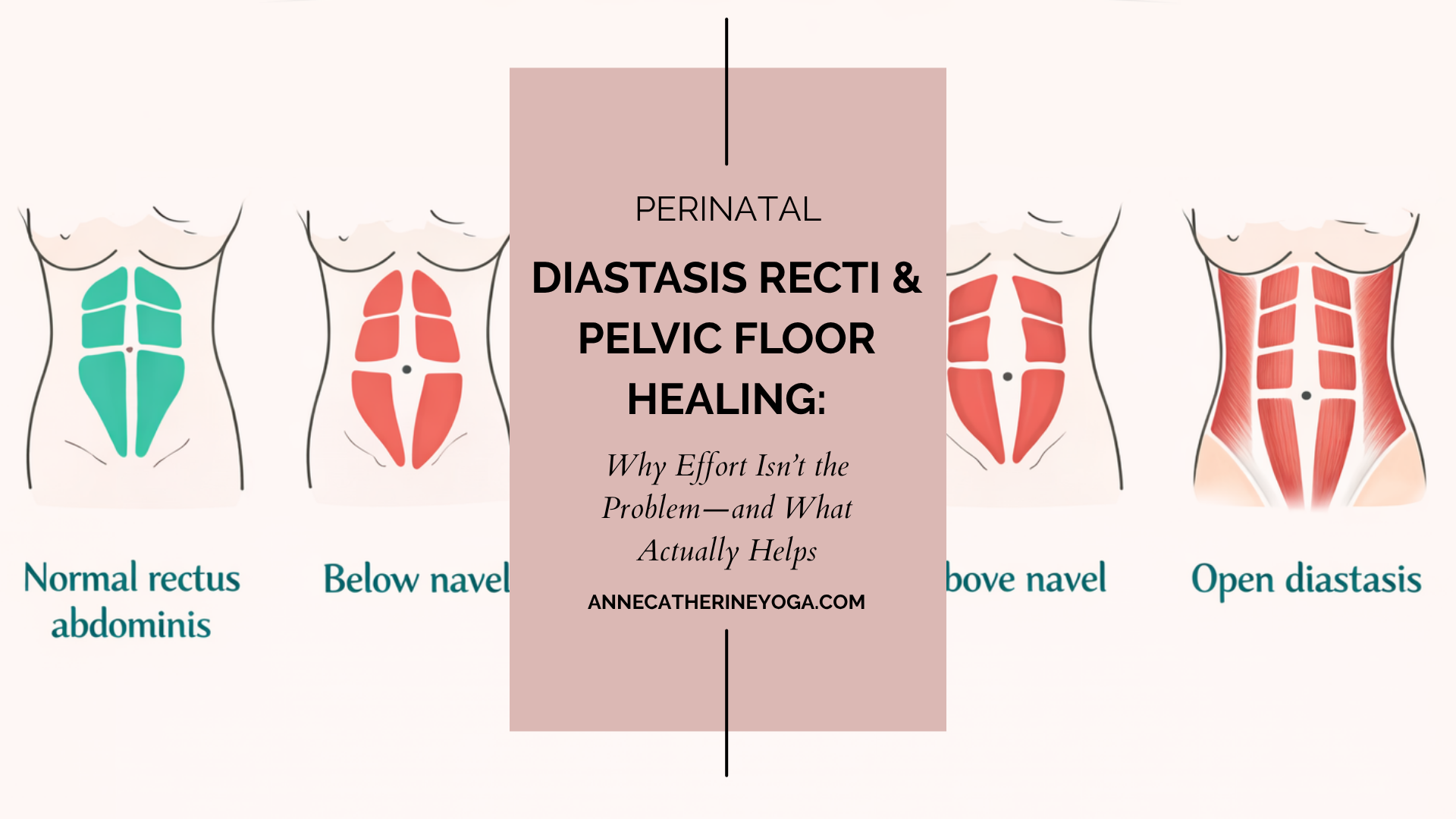
Diastasis Recti & Pelvic Floor Healing: Why Effort Isn’t the Problem—and What Actually Helps
A compassionate guide for those with diastasis recti and pelvic floor symptoms who feel stuck despite “doing everything right”
If your diastasis recti or pelvic floor symptoms aren’t improving—even after trying exercises, yoga, or online programs—you’re not failing. The issue isn’t effort. It’s how your body is managing pressure.
TL;DR
If your diastasis recti or pelvic floor symptoms aren’t improving, it’s not your fault.
The issue is rarely a lack of effort or the “wrong” exercise—it’s how your body is functioning while you move.
Traditional yoga classes, workouts, and online videos often reinforce compensations, which can stall or worsen healing.
Diastasis recti and pelvic floor dysfunction are part of the same core system conversation.
Healing happens through individualized, whole-body, functional guidance, applied to everyday life—not a single exercise.
When “Doing All the Right Things” Still Doesn’t Work
Many women arrive here feeling quietly defeated.
They’ve done the ab exercises meant to “close the gap.”
They’ve attended yoga classes and tried to engage their core.
They’ve followed postpartum programs and YouTube videos faithfully.
And yet:
The abdomen still domes or feels disconnected
The pelvic floor still feels unpredictable—tight, weak, heavy, or all three
Strength is there, but stability is not
Progress feels confusing or nonexistent
If this sounds familiar, please hear this first:
Nothing is wrong with you.
And this is not your fault.
Why More Exercises Aren’t the Answer
Diastasis recti and pelvic floor dysfunction are not effort problems. They are coordination problems.
Your diaphragm (breath), abdominal wall, pelvic floor, spine, and nervous system function together as a pressure-management system. When that system loses coordination—often through pregnancy, birth, chronic stress, or repeated bracing—the body compensates.
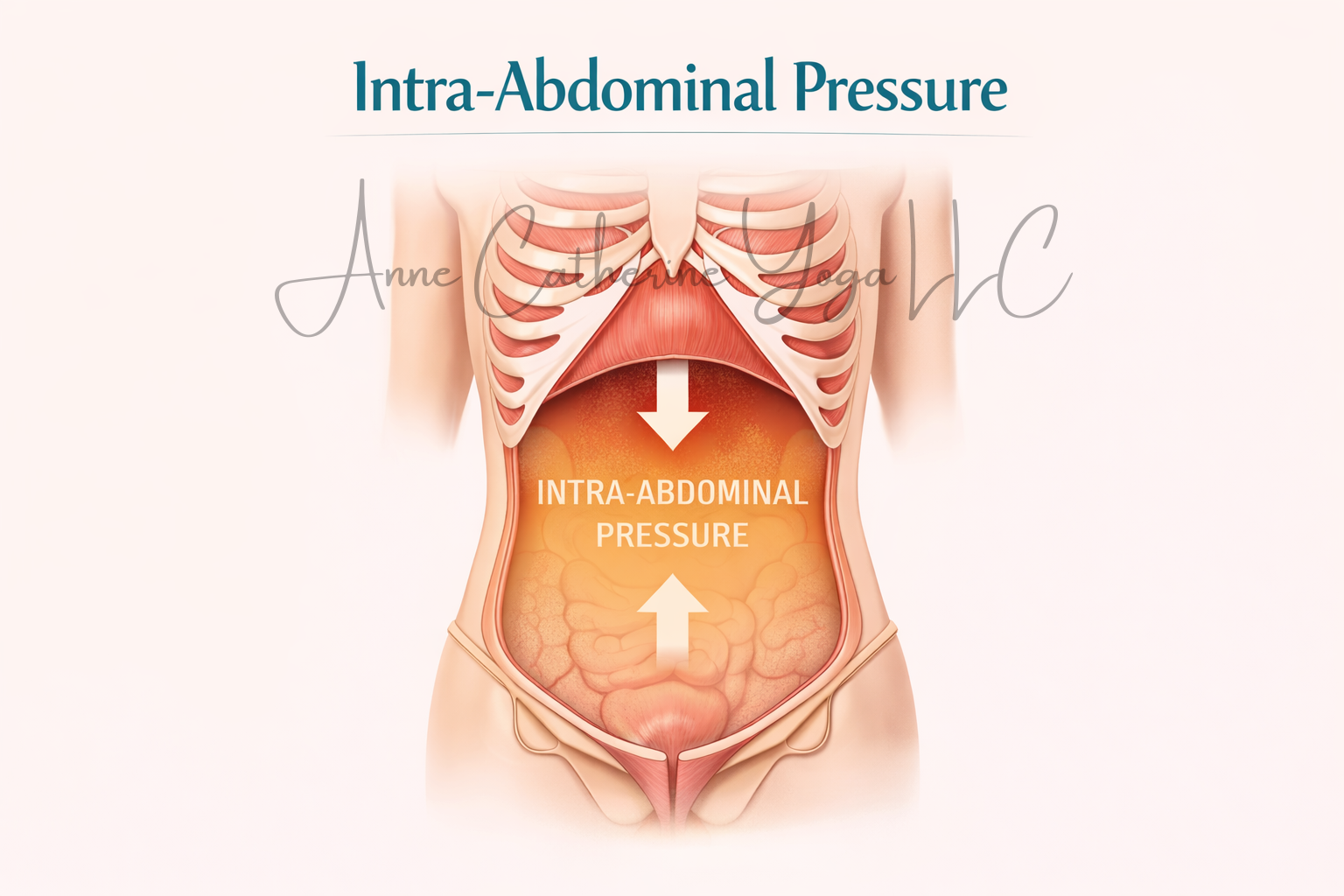
Intra Abdominal Pressure
Here’s the key insight most people are never taught:
If your body is compensating, loading it with exercise strengthens the compensation—not the function.
This is why:
Crunches can widen a gap
Planks can increase downward pressure
Yoga poses can quietly reinforce doming or collapse
It’s not the exercise itself.
It’s how your body is doing it.
Diastasis Recti and the Pelvic Floor: One System, Not Two Problems
Diastasis recti and pelvic floor symptoms commonly show up together because they come from the same root issue: poor pressure management and coordination within the core system.
You cannot fully heal one without addressing the other.
Isolated “ab work” or “pelvic floor exercises” often fall short because they treat symptoms in pieces, rather than restoring how the whole system works together.
Why Classes and Videos Often Miss the Mark
This is not a critique of your effort—or of teachers in general. It’s an education gap.
Most yoga and fitness trainings teach:
Shapes and poses
Exercises and progressions
How to cue externally
They do not consistently teach:
Functional pressure management
Diaphragm–pelvic floor coordination
Tissue behavior under load
Postpartum or women-specific biomechanics
Nervous system responses to movement
Many instructors have also never experienced diastasis recti or pelvic floor dysfunction themselves. Their cores engage reflexively—even after pregnancy—so they don’t know why your body can’t simply “do it the same way.”
When you’re told to “just engage your core” and you can’t, it isn’t because you’re doing something wrong. It’s because your body hasn’t been taught a different strategy yet.
My Story—and Why This Approach Exists
I lived with diastasis recti and pelvic floor dysfunction for ten years without knowing it.
I was active. I was strong. I was teaching yoga.
And my core still didn’t function the way it should.
No one assessed me after my first pregnancy.
No one explained pressure, breath, or coordination.
No one connected my pelvic floor symptoms to my abdominal wall.
It wasn’t until early in my second pregnancy that I finally understood what was happening—and even then, the solutions offered were mostly lists of exercises.
They didn’t help.
What changed everything was learning to observe how my body managed pressure in daily life—and changing that.
This approach to yoga and movement didn’t exist when I needed it. I had to learn outside of traditional yoga—through biomechanics, physical therapy–informed perspectives, and functional movement—and then carefully weave that knowledge back into a yoga practice that made sense for real bodies.
That integration is now the foundation of my work.
What Healing Actually Looks Like
Healing is not about fixing you. Your body is not broken.
It’s about:
Understanding what your body is doing now
Stopping the patterns that reinforce dysfunction
Re-educating coordination gently and consistently
Applying these skills to every activity you do
This includes:
Getting out of bed
Picking up your child
Standing at the sink
Going for a hike
Returning to workouts
And, eventually, returning to yoga classes with a body that feels different from the inside out
This is how healing becomes sustainable.
Why Posture, Alignment, and Your Type of Diastasis Recti Matter
One of the most overlooked pieces of diastasis recti healing is how your body is organized when you’re not exercising.
Posture and alignment are not about standing up straight or holding yourself rigid. They are about how your skeleton, breath, and muscles stack and respond to gravity throughout the day.
If your posture consistently:
Pushes pressure forward into the abdominal wall
Shifts load downward into the pelvic floor
Locks the rib cage or tucks the pelvis
Or collapses through the chest and upper back
Then your core system is under strain before you ever do an exercise.
This matters because diastasis recti is not just something that shows up on your abdomen—it reflects how your whole body is managing pressure.
The Different Types of Diastasis Recti Tell Us Important Information
Not all diastasis recti look or behave the same.
Some separations show up:
Mostly above the navel
Mostly below the navel
Around the navel
Or along the entire length of the linea alba
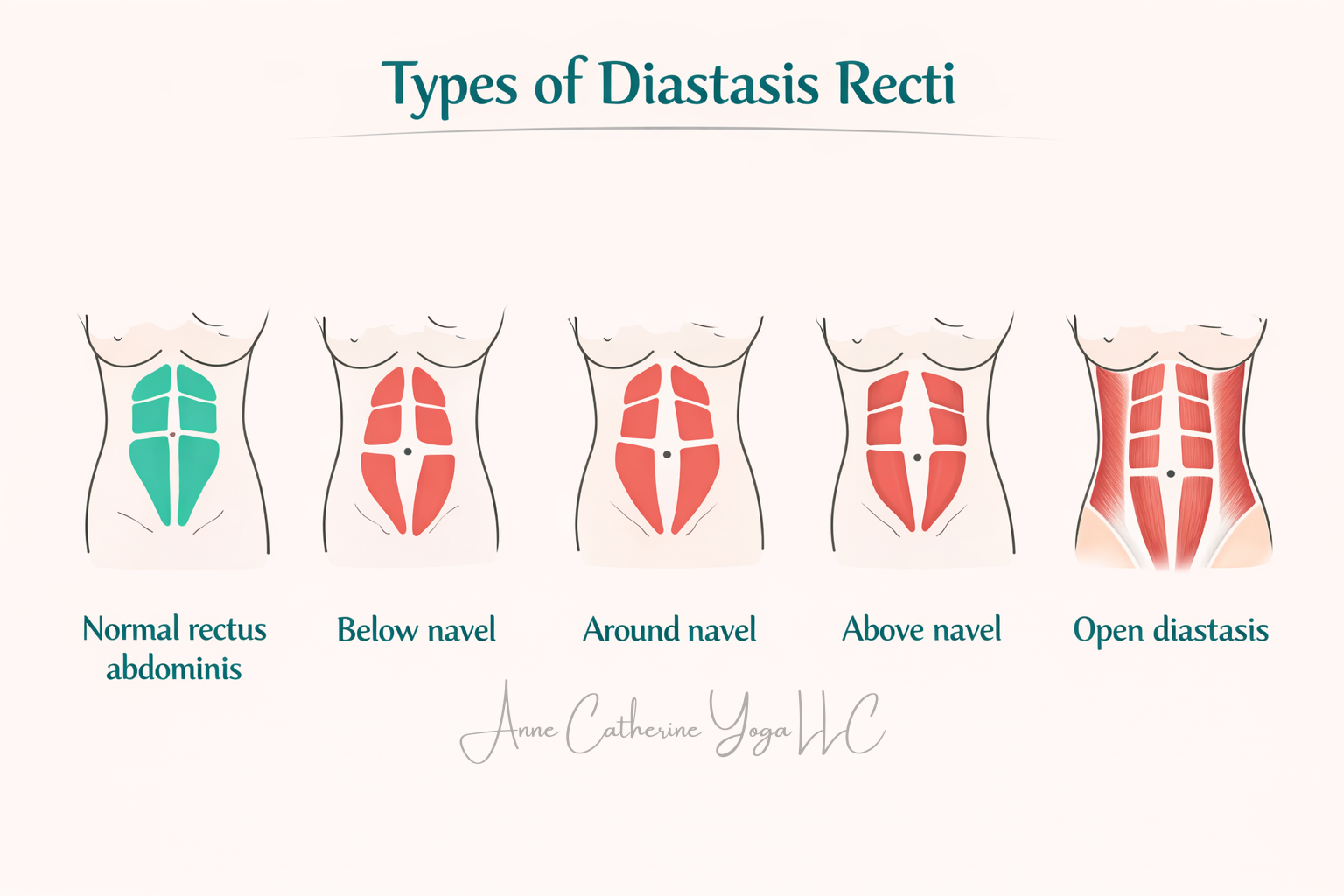
Types of Diastasis Recti
Where and how your diastasis shows up gives us clues about:
How pressure is moving through your body
Where your system is compensating
How your breath, rib cage, and pelvis are interacting
What your nervous system is doing under load
This is why a one-size-fits-all program can’t work.
Two people can both have diastasis recti—and need completely different approaches based on:
Their posture and alignment
Their movement habits
Their pelvic floor response
Their life demands (caregiving, work, stress, past injuries)
Understanding your pattern helps us sort out what’s actually happening, rather than guessing or blindly strengthening.
Diastasis Recti, Pelvic Floor Symptoms, and “Embarrassing” Issues Are Not Separate Problems
Incontinence.
Tampons falling out.
Pelvic heaviness.
Back pain.
Core weakness.
These are not isolated pelvic floor problems.
They are core system dysfunctions.
Your diaphragm, abdominal wall, pelvic floor, spine, and nervous system are meant to work together as a coordinated unit. When that coordination is disrupted—often through pregnancy, birth, chronic stress, or years of compensating—the system adapts.
That adaptation may show up as:
A diastasis recti
Pelvic floor weakness or over-tightening
Leaking with coughing or jumping
A sense that your core “just isn’t there”
This is why doing isolated pelvic floor exercises or generic ab workouts often doesn’t help—and can sometimes make symptoms worse.
They don’t address how the whole system is working together.
Why Generic Workouts and Videos Don’t Work for This
Most workouts are designed for bodies that already:
Manage pressure well
Coordinate breath and movement reflexively
Have intact load transfer through the core
If your body doesn’t yet have those skills, the workout becomes a stressor—not a solution.
When we isolate one area (abs, glutes, pelvic floor) without addressing:
Posture and alignment
Breath mechanics
Nervous system response
Daily movement patterns
The body compensates.
And the compensation is what keeps the problem in place.
This is not because you’re doing something wrong.
It’s because your body needs a different starting point.
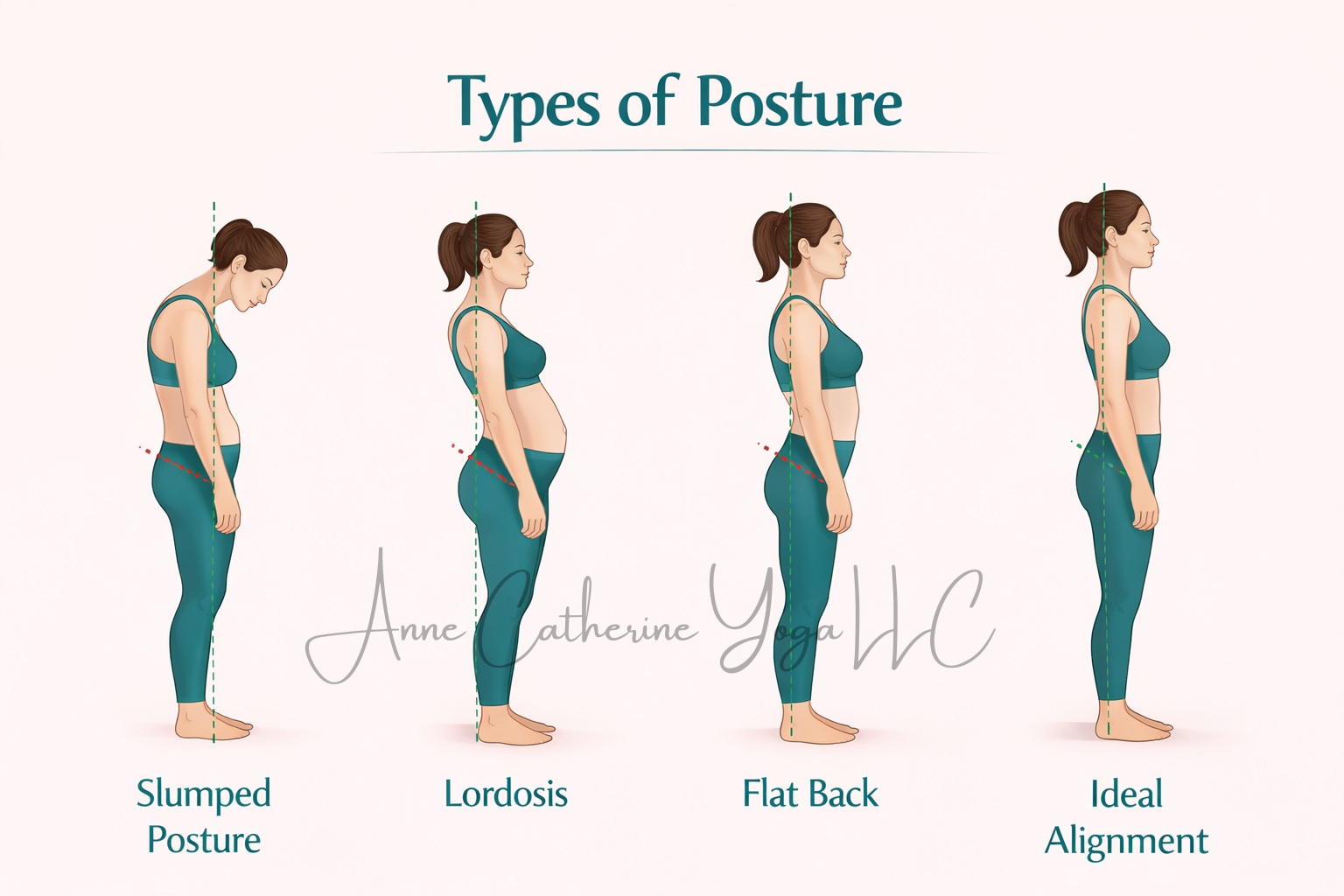
Some types of posture
This Is Why a Whole-Body, Individual Approach Matters
Healing diastasis recti and pelvic floor dysfunction is not about fixing a gap or strengthening one muscle.
It’s about:
Restoring coordination
Improving pressure management
Reorganizing how your body relates to gravity
Teaching skills you can use everywhere—not just in a workout
That’s why posture, alignment, and the type of diastasis you have matter.
And that’s why generic approaches fall short.
Your whole body is involved.
Your daily life is involved.
And your healing deserves to reflect that.
Why Individual Guidance Matters
There are shared principles that support diastasis recti and pelvic floor healing—but how they apply is always individual.
Your body has:
Its own history
Its own movement habits
Its own nervous system responses
Generic classes and videos cannot respond to that.
Personal, skilled guidance can.
In a 1:1 setting, I can:
See how you move
Identify what’s reinforcing the issue
Teach you what to stop doing
Show you what to focus on instead
This work is quiet, respectful, and educational—never forceful.
Work With Me
If this article resonates, support is available.
I offer 1:1 personalized sessions, designed to meet you where you are:
I can come to you, or
You can meet me at my community gym
Next steps:
Book a call to see if we’re a good fit
Or Contact Me when you’re ready to begin
You don’t need to decide everything today.
You just need the right guidance for your body.
You are not behind.
You are not broken.
You simply deserve care that understands how your body actually works.
Continue Learning & Deepening Your Understanding
If this article resonated with you, you may also find it helpful to explore other pieces in my Learning Library that expand on these themes in more detail. I’ve written additional articles on diastasis recti, pelvic floor health, postpartum core recovery, pressure management, breath and alignment, and why many traditional exercise approaches fall short for women’s bodies. These resources are meant to help you build understanding at your own pace, so you can feel more informed, less alone, and more confident in how you care for your body. Healing doesn’t come from one article or one exercise—it comes from learning how your body works as a whole.
Suggested Reading: Deepen Your Understanding of Core & Pelvic Floor Health
If you’d like to continue learning, these articles explore the themes discussed here in more depth. Each one looks at core and pelvic floor health from a whole-body, functional perspective—helping you better understand why symptoms persist and how to support lasting change. There’s no need to read everything at once; consider this a gentle pathway, not a checklist.
Core + Pelvic Floor, Diastasis Recti, and Prolapse… Oh My!
Diastasis recti isn’t just about a gap. This article breaks down intra-abdominal pressure, core coordination, and daily habits that influence leaks, back pain, prolapse symptoms, and lingering instability.Understanding Functional Movement Yoga
Learn how functional movement principles integrate with yoga to improve daily life, prevent injury, and build strength that actually translates off the mat.Functional Movement & Biomechanical Alignment: Strong, Smart, and Sustainable for Every Woman
An exploration of posture, alignment, and biomechanics—and why lasting results come from body awareness, not quick fixes.Understanding Abdominal Hernias: Causes, Prevention, and Treatment
A clear, accessible guide to hernias, how they relate to pressure and core dysfunction, and how mindful movement can support prevention and recovery.The Power of Diaphragmatic Breathing: A Path to Better Health
An in-depth look at how breath supports your core, pelvic floor, digestion, and nervous system—and why breathing patterns matter more than most people realize.
These resources are here to help you feel more informed, less alone, and more confident in how you care for your body. Healing doesn’t come from one article or one exercise—it comes from understanding how your body works as a whole.
This article is for educational purposes only and is not medical advice. Always consult your healthcare provider regarding questions about breastfeeding, nutrition, postpartum recovery, or your individual health. If you found this article helpful, you're welcome to share it. If you're sharing it with clients or students, please credit Anne Catherine Yoga. In the spirit of yoga, we practice both ahimsa (non-harming) and asteya (giving proper attribution to the work of others).
