
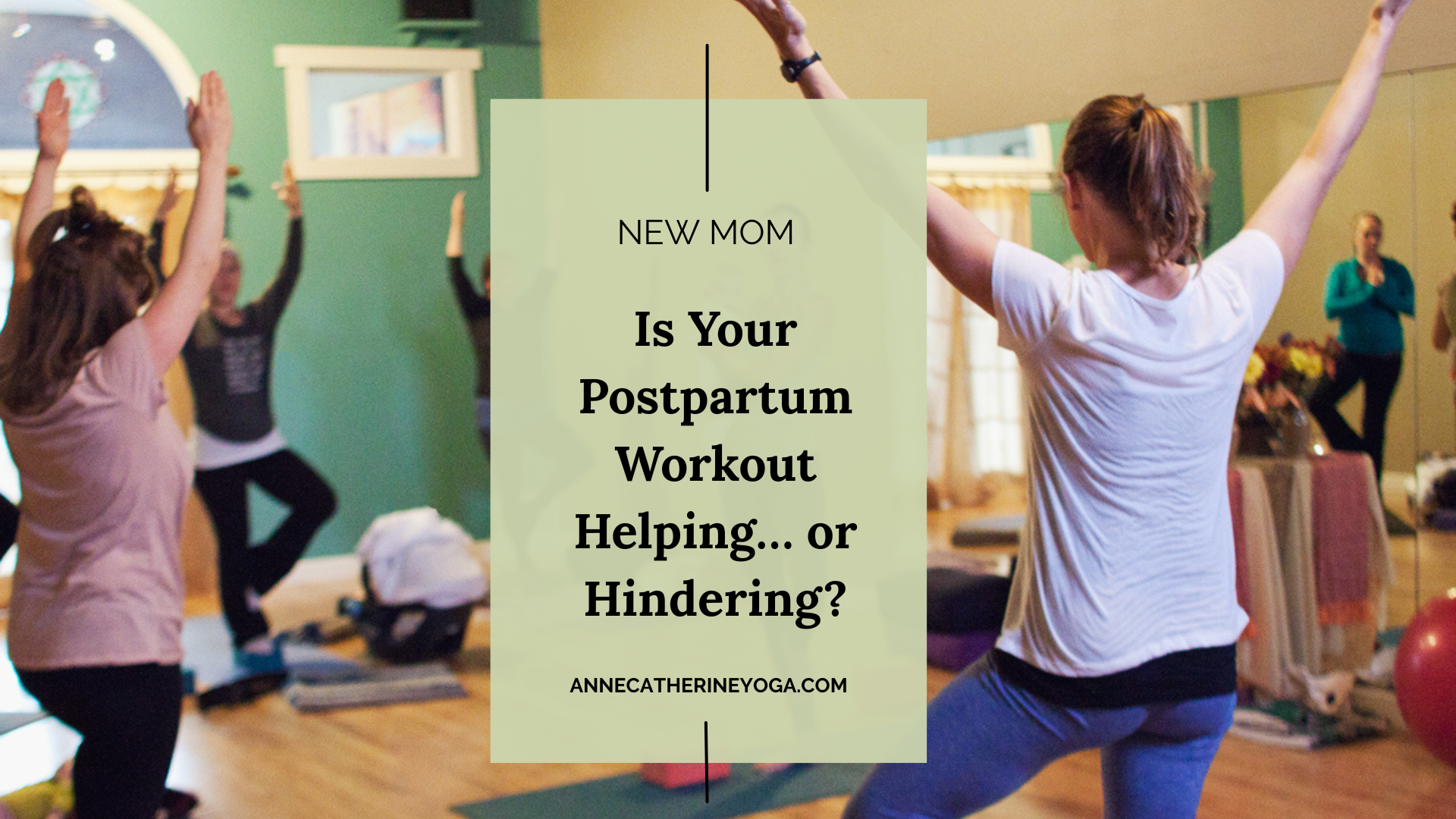
Is Your Postpartum Workout Helping… or Hindering?
"Just because you can doesn't always mean your body is ready."
The postpartum period can feel full of mixed messages.
On one hand, you're told to rest, recover, and be gentle with yourself.
On the other, social media is filled with "mom workouts," stroller boot camps, HIIT challenges, and fitness programs promising to help you "get your body back."
Many of these programs are created with good intentions. They offer community, accountability, and a chance to move your body again after birth. For many new mothers, that support is exactly what they're craving.
Movement is one of the best things you can do after having a baby.
The question isn't whether you should exercise.
The question is whether the exercise you're doing matches what your body needs right now.
The Biggest Myth: Feeling Better Means You're Healed
One of the most common misconceptions is that once you're feeling stronger—or once you've been "cleared" by your healthcare provider—your body has fully recovered from pregnancy and birth.
In reality, healing continues for many months to years.
Your abdominal wall is reconnecting.
Your pelvic floor is recovering.
Your connective tissues are rebuilding.
Hormones continue influencing your joints and soft tissues, especially if you're breastfeeding.
Even if you feel energetic again, your body may still be relearning how to support itself during everyday movement.
Healing isn't measured by the calendar.
It's measured by how your body functions.
Exercise Isn't the Problem
Research consistently shows that movement after birth supports physical and mental health.
Walking.
Gentle strength training.
Breathing exercises.
Mobility work.
Yoga.
Functional movement.
These all improve circulation, rebuild strength, support emotional well-being, and prepare you for the physical demands of caring for your baby.
Exercise is not the enemy.
Matching the right movement to the right stage of recovery is what matters most.
Why Traditional Fitness Classes Can Miss the Mark
Most fitness instructors are highly skilled at helping people become stronger, faster, or fitter.
Very few receive extensive education in postpartum recovery. And many of them believe they are qualified to teach others just because they had a baby.
That means many classes include exercises like:
Burpees
Jumping
Mountain climbers
Crunches
Long planks
Heavy lifting
Running drills
High-intensity intervals
None of these movements are inherently "bad."
They simply place greater demands on the abdominal wall and pelvic floor.
If those systems haven't yet recovered, your body often finds ways to compensate.
And that's where problems can begin.
The Delayed Feedback Trap
One of the biggest challenges is that your body doesn't always tell you immediately that something isn't working.
You may finish class feeling strong.
You may even feel empowered.
Then two weeks later you notice you're leaking when you sneeze.
Or your pelvis feels heavy after carrying your baby.
Or your back begins aching every evening.
Or you notice a bulge through the middle of your abdomen when you sit up.
These symptoms often appear gradually, making it difficult to connect them back to the workout that overloaded a body still healing.
It's easy to assume these are simply part of motherhood.
They aren't.
They're your body's way of asking for a different approach.
What Your Body May Be Trying to Tell You
Imagine driving your car with the check engine light on.
You could ignore it.
Maybe nothing dramatic happens that day.
But the warning light is valuable information.
Your body communicates in much the same way.
Leaking.
Pelvic heaviness.
Pressure.
Pain.
Low back discomfort.
Needing to hold your breath every time you lift your baby.
Feeling unstable.
These aren't signs that you're failing.
They're feedback.
Listening to those signals isn't giving up.
It's practicing wisdom.
More Isn't Always Better
Our culture celebrates pushing harder.
The postpartum body asks something different.
Sometimes the strongest thing you can do is slow down enough to rebuild the foundation first.
Learning to breathe well.
Restoring pressure management.
Reconnecting your core and pelvic floor.
Improving balance and stability.
Strengthening the movement patterns you'll use dozens of times every day—lifting your baby, getting up from the floor, carrying groceries, climbing stairs, or loading the stroller into the car.
These skills may not look impressive on Instagram.
But they're the foundation that allows you to safely return to hiking, running, strength training, dance, or your favorite fitness class with confidence.
Red Flags in a Postpartum Fitness Class
Every body is different, but these are worth paying attention to.
A class may not be the right fit if it:
Encourages everyone to do the same workout regardless of birth experience or recovery.
Uses "no pain, no gain" or "push through it" messaging.
Doesn't discuss breathing, pressure management, or pelvic floor function.
Includes jumping, running, or high-impact exercise without offering meaningful modifications.
Focuses on getting your body back instead of helping your body recover.
Dismisses leaking, pelvic heaviness, abdominal doming, or pain as "normal after babies."
Leaves you feeling less supported in your body than when you arrived.
There Is Another Way
If you've ever left a workout wondering,
"Why am I leaking now?"
"Why does my pelvis feel heavy?"
"Why does my back hurt more after exercising?"
...your body isn't failing you.
It's communicating with you.
Sometimes what we need isn't a harder workout.
We need a different approach.
My work blends evidence-based rehabilitation principles commonly found in women's health physical therapy with the holistic practices of yoga, somatic movement, and nervous system regulation.
It's less about burning calories and more about rebuilding the way your body moves, breathes, and supports you from the inside out.
Less clinical. More community. The same respect for the science.
Whether you join one of my Women's Health + Prenatal Yoga classes, Postpartum Yoga with Baby classes, or schedule a private movement session, you'll find a welcoming space where education, movement, and community come together.
Together we explore functional movement patterns that support real life—lifting your baby, carrying laundry, getting on and off the floor, hiking your favorite trail, or simply moving through your day with greater ease.
We don't chase exhaustion.
We rebuild confidence.
We don't measure success by how sore you are tomorrow.
We measure success by how supported your body feels months and years from now.
Once Postpartum, Always Postpartum
One of the guiding principles in my work is this:
Once postpartum, always postpartum.
That doesn't mean your body is forever broken.
It means pregnancy and birth become part of your movement history.
Whether your baby is three months old, three years old, or twenty-three years old, your body still carries the adaptations of pregnancy and birth.
Many women live with leaking, abdominal separation, pelvic heaviness, hip pain, or back pain for years because they were told those symptoms were simply "normal."
The good news is that healing doesn't have an expiration date.
Your body continues adapting throughout your lifetime.
With thoughtful movement, education, and support, it's never too early—or too late—to improve how your body functions.
A Gentle Reminder
You don't need to earn your recovery.
Your body doesn't need punishment for growing and birthing a baby.
The postpartum period isn't simply about getting back to where you were.
It's an opportunity to build a body that supports you for decades to come.
One that carries children.
One that hikes mountains.
One that enters menopause with greater resilience.
One that continues serving you throughout every season of life.
That's a much bigger goal than fitting into your old jeans a little sooner.
Continue Learning
If you're looking for movement that honors both the science of recovery and the wisdom of listening to your body, I'd love to welcome you into my community.
My Women's Health + Prenatal Yoga and Postpartum Yoga with Baby classes combine evidence-based biomechanics, core and pelvic floor rehabilitation, yoga, somatic movement, and nervous system regulation in a supportive, small-group environment. I also offer private sessions for women who want individualized guidance.
Whether you're newly postpartum or many years beyond birth, remember this:
It's never too soon—or too late—to learn how to move in a way that supports your body for life.
🌿 If You Enjoyed This Article, Read These Next
Recovery doesn't happen in isolation. These evidence-informed articles will help you better understand your body, support your healing, and build confidence in every stage of motherhood.
🌸 The Real Postpartum Rehab: What to Do After the Six-Week Visit
Your six-week checkup is an important milestone—but it isn't the finish line. Learn what true postpartum rehabilitation looks like and why rebuilding your breath, core, and pelvic floor is about function, not just being "cleared."
🌸 The Reality of Postpartum Recovery—Time, Not a Timeline
Healing isn't measured in weeks. Discover why postpartum recovery unfolds over months, how hormones and tissue healing continue long after birth, and why giving yourself grace is one of the healthiest things you can do.
🌸 Diastasis Recti & Pelvic Floor Healing: When Exercise Isn't Working
Doing all the "right" exercises but still leaking, doming, or struggling with your core? Learn why more exercises aren't always the answer—and how a whole-body approach can make the difference.
🌸 Functional Movement & Biomechanical Alignment: Strong, Smart, and Sustainable for Every Woman
Strength isn't just about muscles—it's about how your whole body works together. Discover why functional movement creates lasting resilience for pregnancy, postpartum, menopause, and beyond.
🌸 From Pregnancy to Midlife and Beyond
Pelvic floor health isn't just a postpartum conversation. Explore how breath, balance, biomechanics, and functional movement support women through every season of life.
🌸 Why I Combined Women's Health and Prenatal Yoga (And Why It Isn't a Typical Yoga Class)
Curious why I teach women of all ages alongside pregnant students? Learn why this unique approach creates a community centered on function, education, and lifelong wellness—not just exercise.
Explore the Full Learning Library
Looking for more evidence-informed resources on pregnancy, postpartum recovery, pelvic floor health, functional movement, menopause, yoga philosophy, and women's wellness?
Browse the complete Learning Library, where you'll find articles designed to educate, empower, and support you through every season of womanhood. Anne Catherine Learning Library
One additional suggestion: because this article is about returning to exercise, I'd also include a small "Related Resource" callout box within the article (before "Continue Learning"):
📖 Looking for a step-by-step plan?
My Safe Return to Exercise Guide walks you through rebuilding strength after birth, including breathwork, core and pelvic floor function, and how to know when your body is ready to progress. It's a perfect companion to this article.
Educational Disclaimer: This article is for educational purposes only and is not medical advice. Always consult your healthcare provider regarding questions about breastfeeding, nutrition, postpartum recovery, or your individual health. If you found this article helpful, you're welcome to share it. If you're sharing it with clients or students, please credit Anne Catherine Yoga. In the spirit of yoga, we practice both ahimsa (non-harming) and asteya (giving proper attribution to the work of others).
