
🌸 The Real Postpartum Rehab: What to Do After the Six-Week Visit
Because “cleared” doesn’t mean complete.
TL;DR
The six-week postpartum visit clears you medically — but not functionally.
True recovery means retraining your breath, core, and pelvic floor to work together again, restoring balance in your nervous system, and building strength through awareness, not intensity.
Healing happens in how you move through daily life — feeding, lifting, carrying — not just in your workouts.
Returning too quickly to “fitness,” even classes marketed for moms, can strain healing tissues and delay recovery.
Start instead with gentle, foundational practices:
functional breathing, mobility for ribs and shoulders, and mindful posture that reconnects you to your true core.
These steps regulate your body’s stress response, prevent prolapse or diastasis recti, and build sustainable strength.
Your body deserves more than “you’re cleared.”
Learn how to heal — not hustle — with The Safe Return to Exercise Guide, your roadmap to safe, restorative postpartum recovery grounded in science and compassion.
The approach in this article draws from decades of women’s health research and the work of leading educators who I’ve trained with.
💜 The Myth of Being “Cleared”
At six weeks postpartum, most of us hear the same phrase:
“You’re all healed. You’re cleared for normal activity.”
But what does cleared really mean?
It means your provider didn’t find active bleeding, infection, or visible complications. It does not mean your core is stable, your pressure system is regulated, or your pelvic floor is ready to carry load.
The six-week visit is a medical milestone, not a rehabilitation plan. It’s there to make sure you’re no longer in danger — not to ensure that you’re ready to lift, run, flow, or return to your mat.
And yet, so many birthing people are eager to move again. You miss the grounding of yoga, the clarity of a run, the strength of your pre-pregnancy body. Your mind may feel ready — but your tissues may still be in early healing mode.
This is where the disconnect begins.
⚠️ Why It’s So Hard to “Wait”
It’s easy to think, “The baby’s out — what harm could a little movement do?”
But the truth is, injuries from birth often appear after, not during, the early weeks.
Prolapse, diastasis recti, incontinence, and chronic back pain can emerge when pressure inside the abdomen increases faster than your core and pelvic floor can adapt.
That’s why the six-week visit exists — it gives your body time for bleeding to stop, sutures to heal, and organ positioning to begin stabilizing.
But even then, the deeper layers of fascia and connective tissue continue remodeling for months (and in some cases, up to a year).
Even well-meaning fitness studios and yoga classes can unintentionally invite you back too soon.
Waivers are often signed once, not after major medical events.
And because many instructors are paid per head, not per outcome, they may not ask about your postpartum status — or even know what to look for.
That’s why self-advocacy matters.
Your instructor’s $5 class commission isn’t worth your long-term health.
If you feel ready to move before six weeks, start instead with gentle breath and reconnection — what I call Step 1: Reconnect.
This is where true recovery begins.
🌿 Gentle Practices You Can Begin Today
The following steps are safe, foundational movements you can begin right now — no matter where you are in your postpartum journey.
They’re designed to help you reconnect with your body’s natural rhythm and begin restoring strength from the inside out.
Because safety is always my top priority, I only share free resources and public practices that are gentle, restorative, and appropriate without professional supervision.
These movements are intended to nurture awareness, not intensity — to help you rebuild confidence and connection at your own pace.
If at any point you experience pain, pressure, or leaking, pause and re-evaluate if you are ready for this practice.
If you are futher along in your postpartum recovery, after lochia flow has ceased, or even months or years later, please reach out to a qualified pelvic-health physical therapist or perinatal movement specialist.
You don’t need to “work out.”
You need to tune in.
Your healing deserves both gentleness and support.
🌬 Step 1: Reconnect — Start with Your Breath
Breath is the foundation. It’s where we all begin.
This practice is safe to begin as early as the first days after birth.
However, It’s most important to REST. REST. REST. As well as focus on caring for baby while supporting your healing. So if you feel inclined to take a few moments of mindful breathing, please do. But do also give yourself a lot of grace. There will be time to return to any activity you like, when your body and your life are ready.
Returning to your breath is how we return to ourselves — the source of grounding, awareness, and function from the earliest days after birth to the most challenging of workouts.
You need to breathe — and breathe well.
Yes, it’s possible to breathe “wrong.” When the body relies on secondary respiratory muscles (neck, shoulders, upper chest), we lose the natural pressure regulation that supports the core, pelvic floor, and our emotional well-being.
In postpartum recovery, poor breathing mechanics can worsen diastasis recti, contribute to prolapse, lead to hernia, and prevent deep core healing.
At any stage of life, dysfunctional breathing keeps the nervous system locked in fight-or-flight, raising cortisol and feeding the cycle of tension and fatigue. In life this can lead to weight gain, stress, and frustration. In postpartum, this can affect your ability to heal and produce milk.
This practice helps you return to functional breath — the kind that nourishes, stabilizes, and calms.
🌿 The Reconnection Practice
Sit or lie down comfortably, shoulders relaxed, spine supported.
Place one hand on your lower ribcage and the other on your lower belly.
Inhale gently through your nose, feeling your ribs expand sideways and back like an umbrella opening.
Exhale slowly through your nose or softly parted lips, allowing your ribs to hug inward and your pelvic floor to lift slightly.
Inhales and Exhales should aim for a count of 5-6 each.
Repeat for 1–2 minutes, noticing the rhythm of expansion and release.
Each breath is a bridge back to stability, softness, and self.
This is where recovery truly begins.
This gentle rhythm — breath expanding and drawing in — helps restore your pressure system: the relationship between diaphragm, abdominals, spine, and pelvic floor. This is your true “core”.
It also awakens awareness of how your body moves now, not how it used to.
Ready to reconnect with your body?
My Safe Return to Exercise Guide walks you through how to use breath as your first rehab tool — with daily practices you can start right now.
🌿 Get the guide

💫 Why Breath Comes Before Abdominal Work
Your breath is your pressure regulator.
It coordinates the diaphragm, core, and pelvic floor so every inhale and exhale supports—not strains—your healing tissues.
Functional breathing = functional movement.
Restoring breath mechanics helps you stabilize before you strengthen.Poor breathing can delay recovery.
Shallow, chest-driven breath overuses neck and shoulder muscles, increases abdominal pressure, and can worsen diastasis recti, prolapse, or leakage.Calm breath calms the body.
Deep diaphragmatic breathing lowers cortisol and shifts you from fight-or-flight into rest-and-restore, where healing actually happens.Breath connects body and mind.
Every full exhale brings awareness, grounding, and presence—key ingredients for postpartum recovery.
🩷 Start here, stay curious, and let each breath remind you that strength begins with softness.
🌿 Step 2: Create Mobility — Stability Through Movement
The second stage of recovery is about creating mobility in your core — not crunches or heavy lifting, but gentle re-education in how your body moves as one integrated system.
Before you can build strength, you need your ribs, spine, and pelvis to communicate again.
This is how we learn to stabilize the core while the rest of the body moves.
You’ll use a yoga strap, scarf, or towel for these simple upper-body movements.
These can be done seated, standing, or even supported on a birth ball if you prefer.
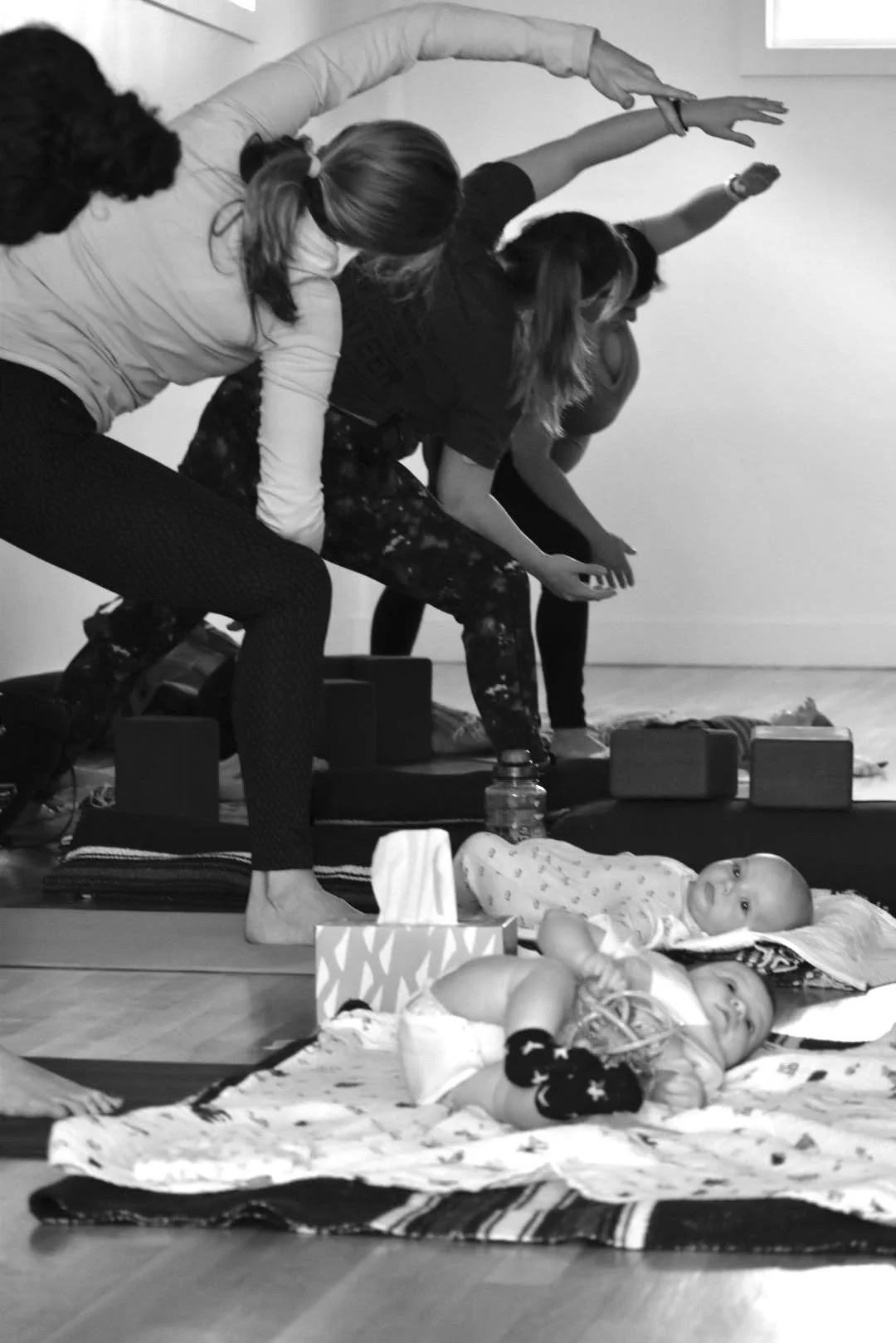
🌬 Strap Mobility Sequence
Overhead Reach
Hold your strap shoulder-width apart.
Inhale as you lift your arms overhead.
As you exhale, gently hug your ribs down toward your pelvis, keeping them stacked—not flared.
Notice how this engages your deep core without “tucking” or crunching.
Repeat slowly 3–5 times.
Arm Sweeps Behind You
With the strap still overhead, inhale to lift, then exhale as you slowly sweep your arms behind you, maintaining the same rib-to-pelvis connection.
Go only as far as your shoulders allow without lifting or arching your ribs forward.
Feel your chest open and your shoulders move freely.
Repeat 3–5 times, breathing steadily.
Side Leans for Waist + Rib Mobility
Hold the strap overhead again.
On an exhale, gently hug your right side ribs toward your pelvis and lean slightly to the left.
Inhale back to center.
Exhale to the other side, feeling the side body strengthen and lengthen.
Move slowly 2–3 times per side.
🌸 What This Does
These movements teach your body to stabilize from within while allowing the upper body to move fluidly.
They:
Improve rib mobility (key for functional breathing)
Strengthen the side body and waist
Restore shoulder freedom without strain
Deepen core awareness through subtle alignment cues
This is how true stability is built — through gentle, intelligent movement that reconnects the whole body, one mindful breath at a time.
💫 Why Mobility Matters Before Strength
Mobility creates stability.
When your joints move freely, your muscles and fascia can activate in the right sequence—so you’re supported, not restricted.
Tight ribs = trapped breath.
Restoring rib mobility allows the diaphragm, core, and pelvic floor to coordinate again, which is the real foundation of strength.Freedom before force.
Moving gently through range before adding load prevents strain on healing tissues and protects the pelvic floor.Fluid movement rewires your nervous system.
Smooth, mindful motion communicates safety to the body, shifting you out of tension and into integration.You can’t strengthen what doesn’t move.
When mobility returns, true strength can finally build—organically, from the inside out.
🩷 Move with ease first. Strength will follow.
Mobility before strength — that’s how we heal sustainably.
The Safe Return to Exercise Guide includes a full visual sequence to help you integrate these movements safely and confidently.
💫 Download it here.
🌸 Step 3: Repattern Everyday Movement
Healing doesn’t happen in your workout — it happens in the way you move through life.
Every time you feed, lift, carry, or roll out of bed, you’re training your body.
The difference is what you’re training for.
Workouts are designed to challenge and fatigue your muscles — they focus on effort, intensity, and output. Their goal is adaptation through stress.
Healing practices, on the other hand, are designed to restore function. They invite awareness, balance, and regulation back into your system so your body feels safe enough to rebuild.
After pregnancy and birth, your body doesn’t need more “working out.”
It needs repatterning — teaching your muscles, breath, and alignment to work together again in daily life.
When you move with intention, your everyday activities become your rehab.
🌿 Practice
Stack your ribs over your pelvis.
This allows your diaphragm, core, and pelvic floor to align and share pressure evenly.Roll to your side before sitting up.
This small change prevents excessive strain on the abdominal wall and supports healing of diastasis recti.Exhale to lift your baby or carrier.
Breathing out during effort helps stabilize the core and protects your pelvic floor from downward pressure.Stand evenly through your feet.
Grounding your weight distributes load through your whole system, improving posture and balance.
Small changes like these retrain your neuromuscular system for balance, strength, and ease.
Over time, this mindful way of moving becomes the bridge between recovery and resilience — the quiet strength that sustains you long after the workout ends.
Every lift, every diaper change, every deep breath — it all counts.
Learn how to turn your daily movements into postpartum rehab inside The Safe Return to Exercise Guide.
🩷 Explore the guide →

⚠️ Why “Fitness” Classes Aren’t Always Healing
This distinction — between movement for healing and movement for fitness — is why many postpartum people struggle when they jump back into exercise too soon, even if the class is labeled “for moms.”
Most mainstream fitness environments, even the well-meaning ones, are built on a performance model: push harder, go longer, sweat more, burn calories.
That model assumes the body is already functioning optimally — and postpartum, that’s rarely the case.
When you’re only weeks or months out from giving birth, your connective tissue, fascia, and internal organs are still adapting to massive changes in pressure, alignment, and hormonal support.
Your nervous system is also recalibrating to new sleep patterns, emotional demands, and the physiological shifts of early motherhood.
Instead of restoration, early “return to fitness” can create compensation patterns — where your body works around its weaknesses instead of healing them.
This can mask symptoms temporarily, but eventually it may lead to prolapse, diastasis recti, chronic back pain, leaking, or pelvic instability.
As I share in my Postpartum Healing Timeline series, full recovery of the core and pelvic system can take six months to a year — sometimes longer, depending on the birth experience, lifestyle, and access to support.
The connective tissues of the abdominal wall and pelvic floor continue remodeling for months after your provider’s “all clear.”
Even after bleeding has stopped and scars have closed, the internal systems are still restoring elasticity, circulation, and tone.
For most people:
0–6 weeks: Rest, breath, and reconnection.
6–12 weeks: Gentle mobility and functional rehab (core + breath + alignment).
3–6 months: Gradual rebuilding of strength and stability through bodyweight and resistance.
6–12 months: Integration into higher-load movement, sport, or fitness classes — if your foundation feels strong and symptoms-free.
That’s not a setback — that’s your body’s normal, intelligent healing rhythm.
When you honor that timeline, you’re not falling behind.
You’re preventing the setbacks that so many “bounce-back” narratives ignore.

🌬 Healing vs. Fitness: The Nervous System Difference
Fitness targets output.
Most modern workouts are built to challenge your body — raising heart rate, cortisol, and adrenaline to create adaptation. This can be energizing when your system is already stable, but postpartum it often reinforces the fight-or-flight state your body is trying to leave behind.Healing targets regulation.
Restorative, functional movement calms the nervous system, supports the parasympathetic (rest-and-restore) response, and teaches your body that it’s safe to soften and rebuild.
Effort vs. awareness.
Fitness focuses on effort — reps, time, and intensity. Healing focuses on awareness — alignment, breath, and how your body feels as you move.
Cortisol or calm.
High-intensity classes can increase cortisol, which may slow tissue repair, disrupt hormones, and exhaust an already depleted system. Gentle, conscious movement lowers cortisol and promotes true recovery.Healing is fitness — redefined.
Functional, mindful movement restores the foundation so you can return to strength, endurance, and sport without re-injury.
🩷 Your nervous system is your first muscle of recovery. Train it with compassion.
🌸 Step 4: Restore the Pelvic Floor
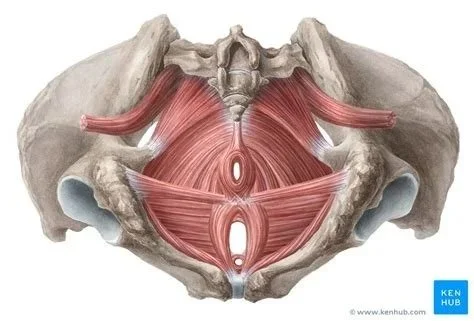
The pelvic floor is more than a group of muscles—it’s a dynamic part of your core and breath system that responds to everything you do.
It supports your organs, stabilizes your spine and pelvis, and communicates constantly with your diaphragm and nervous system.
After birth, the pelvic floor needs time, circulation, and communication to recover. What it doesn’t need is force.
💡 Rethinking “Strength”
Many postpartum people are told to “do your Kegels” — as if squeezing harder or more often automatically means stronger. Fact is, the Kegal was coined in the 1940’s. It’s outdated. It’s no longer considered functional exercise in the movement science world.
But true pelvic-floor health is about coordination, elasticity, and responsiveness.
A muscle that’s always contracted can’t function well — just like a bicep that never releases.
Over-gripping the pelvic floor can actually cause pain, tightness, leaking, or prolapse, especially if it’s disconnected from breath.
Instead of focusing on “tightening,” or “squeeze as hard as you can”… focus on listening.
When you breathe well, your pelvic floor naturally moves: it descends as you inhale and recoils gently as you exhale.
This rhythm supports healing, circulation, and the subtle strength that protects your core.
🌬 The Awareness Practice
Find a comfortable seated or lying position.
Take a soft inhale through your nose. Feel your ribs and belly expand as your pelvic floor gently releases downward.
Exhale slowly and sense your pelvic floor recoil—lifting naturally and subtly.
Notice how your breath and pelvic floor move together. There’s no “doing,” just awareness.
Repeat for 1–2 minutes, letting your breath guide the movement.
This small practice restores the body’s reflexive strength — the kind that works automatically when you laugh, lift, or cough.
Healing the pelvic floor isn’t about tightening — it’s about connection.
My Safe Return to Exercise Guide shows you how to integrate pelvic floor awareness into your breath, posture, and movement — safely and sustainably.
🌸 Begin your recovery journey here.
🌿 Why Awareness Comes Before Strength
Connection precedes contraction.
You can’t strengthen what you can’t feel.
Relaxation enables function.
A responsive pelvic floor must know how to both release and recruit.Breath is the bridge.
Every inhale and exhale retrains the coordination between your diaphragm, core, and pelvic floor.Nervous-system safety matters.
When you move from calm awareness rather than fear or tension, the pelvic floor heals faster and with more integrity.
💬 When to Seek Support
If you notice leaking, heaviness, pelvic pressure, or pain — schedule an evaluation with a pelvic-health physical therapist.
Even a single session can provide invaluable insight and prevent long-term issues.
If you are or if you’re unsure what you’re feeling or sensing you need more support, reach out to me. We can work 1:1 in person or virtually. Message me at Anne@AnneCatherineYoga.com
A well-functioning pelvic floor doesn’t require endless exercises or special tools to do it for you; it requires communication, balance, and care.
When that connection returns, so does your sense of wholeness.

🌺 What a Healthy Pelvic Floor Feels Like
A healthy pelvic floor isn’t “tight.”
It’s responsive — able to soften, lift, squeeze, release, and adapt as you move through life.
🌬 Sensations of Balance
A subtle softness at rest — not gripping or tense.
A gentle rebound or lift on the exhale, as if the tissues are buoyant.
A feeling of steadiness when standing, walking, or lifting — grounded yet free.
Ease with breath — the lower belly and ribs move naturally as you inhale and exhale.
⚖️ Signs of Imbalance
A sense of heaviness, bulging, or pressure in the pelvic area.
Leaking with coughing, sneezing, or exertion.
Pain, burning, or tightness with movement or intimacy.
A feeling of disconnection — as if the muscles don’t respond or engage intuitively.
These sensations are information, not failure.
Your body is communicating what it needs.
If anything here feels familiar, it’s a sign to slow down, reconnect with your breath, and seek support from a pelvic-health professional.
🩷 Awareness is the first step toward healing.
🌞 What a Healthy Core Feels Like
A healthy core isn’t about flat abs or visible strength — it’s about connection, coordination, and responsiveness.
Your core is the meeting place of breath, stability, and movement — the bridge between your ribs and pelvis, your inner and outer world.
🌬 Sensations of Balance
A gentle expansion on each inhale — ribs, belly, and back body moving together.
A natural recoil on the exhale, like an elastic band returning to rest — no force, just tone.
A sense of integration — your breath, posture, and pelvic floor move as one system.
Ease in transitions — standing, sitting, lifting, or twisting feels supported, not strained.
⚖️ Signs of Imbalance
Coning or doming through the center of your abdomen when you move or lift.
Feeling pressure downward into the pelvic floor during effort.
Rib flaring or arching the back to compensate for weak or disconnected core muscles.
A sense of bracing or breath-holding instead of fluid movement.
These are gentle cues to slow down, realign, and reconnect with your breath before adding intensity.
Healing the core is not about tightening — it’s about trusting your center again.
🩷 When your core moves with your breath, your whole body begins to remember how to feel safe and strong.
⚠️ Step 5: Recognize Red Flags — Listening Without Fear
Healing isn’t linear. Even with mindful movement and rest, your body may communicate moments of strain or overload.
These aren’t failures — they’re information.
When you understand what to look for, you can respond early, adjust, and continue healing safely.
Think of these “red flags” as gentle signals from your body saying: slow down, integrate, or seek more support.
🌸 Common Red Flags to Watch For
Leaking urine, stool, or gas during movement, coughing, or laughter
A sensation of heaviness, bulging, or pressure in the pelvic area
Coning or doming along the abdomen when lifting or transitioning
Sharp, persistent pain anywhere in the body
Bleeding or spotting that returns after it has stopped
Fatigue that feels overwhelming or doesn’t improve with rest
Emotional distress, anxiety, rage, or hopelessness that feels difficult to manage alone
These experiences are common, but they are not normal — they’re signs your system needs attention and care.
🌿 What to Do Next
Pause and soften. Take a few slow breaths, come to rest, and notice what feels off.
Modify or scale back. Return to foundational practices — breath, alignment, gentle movement.
Seek professional guidance.
A pelvic-health physical therapist can assess tissue integrity, pressure management, and muscle function.
A mental-health provider or trauma-informed counselor can help you navigate emotional symptoms.
Your primary care provider, OB, or midwife can rule out infection, anemia, or other physical complications.
Healing is not about ignoring pain — it’s about responding with presence and support.
Remember: Healing Vs. Working Out (see earlier in this article).
You don’t have to guess what’s normal or what needs care.
Inside The Safe Return to Exercise Guide, you’ll learn how to spot red flags early and know when to seek professional support.
⚖️ Download your guide today.
💬 The Empowered Approach
Recognizing these signs early doesn’t mean you’re broken.
It means you’re in relationship with your body.
Each signal is an invitation to slow down, recalibrate, and return to the practices that help you feel stable and whole.
In time, these moments become less about “setbacks” and more about self-trust.
🩷 Your awareness is your safety net. The body whispers long before it screams — listen with compassion.
🌺 Step 6: Reclaim Strength Gently
By now, your body has begun to remember its rhythm — breath, balance, and alignment working together again.
This is where you begin to reclaim strength, not through intensity or exhaustion, but through steadiness and integration.
Postpartum strength isn’t about “getting your body back.”
It’s about reinhabiting your body — feeling capable, coordinated, and connected again.
When you move from a place of awareness rather than urgency, strength returns naturally.
🌿 Redefining Strength
True strength begins with function, not force.
It’s the ability to move with confidence, to lift your baby with ease, to get down on the floor and play — all without pain, leaking, or fatigue.
This kind of strength can’t be rushed, and it can’t be outsourced to a one-size-fits-all method.
It grows from your unique foundation, your breath, your timing, and your lived experience.
💫 Gentle Ways to Build Strength
When your core and pelvic floor feel integrated, start exploring these restorative progressions:
Walking with intention. Begin with short, mindful walks, focusing on posture and breath — not pace or distance.
Supported yoga or mobility work. Use props or walls for grounding; move with curiosity, not competition.
Bodyweight resistance. Try wall push-ups, chair squats, or bridges only if your pressure system feels stable.
Functional load. Everyday activities — lifting groceries, carrying your baby, gardening — all count as strength training when done with awareness.
Move slowly enough to feel what’s happening.
Each movement is a dialogue between your breath, core, and nervous system.
⚖️ When to Progress
You’re ready for more challenge when:
You can breathe fully through movement.
There’s no coning, bulging, or heaviness.
You recover quickly after activity.
Your energy feels steady, not depleted.
If any symptom reappears — leaking, pain, fatigue, or pressure — it’s simply a sign to return to foundational practices. Healing isn’t linear, and neither is strength.
🌸 The Long View
Full recovery of connective tissue and fascia can take 6 to 12 months, sometimes longer depending on the birth experience, stress, sleep, and overall health.
That’s not a limitation — it’s your body’s brilliant design for sustainable healing.
There’s no race to “get strong again.” You are already strong — you gave birth, you are adapting, you are here.
Now, your work is to align that strength with function, one conscious movement at a time.
🩷 Strength is not something you earn back. It’s something you remember.
When your foundation is strong, every movement becomes medicine.
The Safe Return to Exercise Guide is your next step — a gentle, evidence-based plan to help you rebuild strength for life.
🌼 Get your copy →
🌼 Your Safe Return Starts Here
Healing after birth is not a race — it’s a reclamation.
Every mindful breath, every gentle adjustment, every moment you choose awareness over intensity is part of your body’s remarkable return to balance.
You deserve more than a quick clearance at six weeks.
You deserve guidance that honors your strength, your story, and your whole being — body, mind, and spirit.
That’s exactly why I created the Safe Return to Exercise Guide.
💗 Inside the Guide
This beautifully designed, evidence-based guide helps you:
Rebuild strength safely and intentionally — at your own pace
Learn how to reconnect breath, core, and pelvic floor for lasting function
Understand what not to do too soon and how to modify movement for healing
Gain confidence in your daily movements — lifting, babywearing, standing, and walking
Recognize red flags before they become setbacks
Restore your energy and trust in your body again
You’ll also receive:
A Quick-Start Companion Sheet for daily practice
A 4-Week Foundational Plan for gradual rebuilding
Bonus Healing Tools — affirmations, breathwork, and reflection prompts
This isn’t a fitness program.
It’s a roadmap for recovery, written with compassion and grounded in science — inspired by my studies with Katy Bowman, Dr. Sarah Duvall, Dr. Ginger Garner, and Leslie Howard — the leading voices shaping today’s postpartum movement education.
🌸 Begin Today
Your body already knows how to heal — it just needs the right support.
When you move with awareness, you’re not just restoring strength — you’re rebuilding trust in yourself.
🩷 Download the Safe Return to Exercise Guide
👉 TBA
🕊 The Science Behind True Rehab
The approach in this article draws from decades of women’s health research and the work of leading educators I’ve trained with:
Dr. Sarah Ellis Duvall (PCES – Core Exercise Solutions): postpartum pressure systems, diastasis, and functional strength.
Katy Bowman (Move Your DNA): alignment, natural movement, and daily movement habits.
Dr. Ginger Garner (Medical Therapeutic Yoga): bridging yoga and clinical care.
Leslie Howard (Pelvic Liberation): embodied pelvic awareness and restoration.
Dr. Kari Bø: pelvic-floor training efficacy in the postpartum population.
ACOG & NICE (UK): postpartum physical activity and return-to-exercise guidelines.
Together, their work reminds us that recovery is both scientific and sacred.
Move with wisdom.
Recover with grace.
Return home to your body — safely, gently, and fully.
References:
American College of Obstetricians and Gynecologists (ACOG), Physical Activity and Exercise During Pregnancy and the Postpartum Period.
Duvall, S. E. (Core Exercise Solutions, PCES Program).
Bowman, K. (2014). Move Your DNA. Nutritious Movement Press.
Garner, G. (2016). Medical Therapeutic Yoga. Handspring Publishing.
Howard, L. (2016). Pelvic Liberation. Llewellyn Publications.
Bø, K. et al. (2017). Effect of Postpartum Pelvic Floor Muscle Training on Pelvic Organ Prolapse and Incontinence.BMJ.
💫 About the Author
Anne Catherine Spear-Price is a yoga teacher, perinatal movement specialist, and doula with over 25 years of practice and 10 years dedicated to prenatal and postpartum care.
Her teaching blends yoga philosophy, biomechanics, and trauma-informed awareness to support the body, mind, and spirit through every stage of motherhood.
Anne Catherine has trained with leaders including Katy Bowman, Dr. Sarah Ellis Duvall, Dr. Ginger Garner, and Leslie Howard, and has guided hundreds of birthing people in rebuilding strength and confidence after birth.
Her approach—rooted in compassion, research, and lived experience—honors the sacred transition of motherhood as both a physical and spiritual journey.
🌸 Work With Me 1:1
If you’re ready for personalized guidance, Anne Catherine offers private yoga, postpartum recovery, and movement consulting—online or in person throughout Boulder County.
Together, you’ll co-create a plan that supports your unique healing timeline, whether you’re newly postpartum, years beyond birth, or navigating perimenopause.
🩷 Schedule a private session or learn more:
👉 www.AnneCatherineYoga.com/private-yoga-and-holistic-care
🩷 Explore my Postpartum Doula Services:
👉 https://www.annecatherineyoga.com/concious-perinatal-doula-services
This article is for educational purposes only and is not medical advice. Always consult your healthcare provider regarding questions about breastfeeding, nutrition, postpartum recovery, or your individual health. If you found this article helpful, you're welcome to share it. If you're sharing it with clients or students, please credit Anne Catherine Yoga. In the spirit of yoga, we practice both ahimsa (non-harming) and asteya (giving proper attribution to the work of others).
© 2025 Anne Catherine Yoga, LLC · All Rights Reserved
For personal educational use only — not medical advice. Reproduction or teaching of this material is prohibited without written permission. Please credit Anne Catherine Yoga or SheBirthsHerself.com when referencing this work.
