

Staying Cool During Pregnancy & Postpartum: What More Mothers Deserve to Know About Heat Safety
TL;DR
Pregnancy naturally increases body temperature and makes overheating happen more easily.
Heat and dehydration during pregnancy can increase stress on the body and raise the risk of dizziness, fainting, heat exhaustion, and other complications.
Postpartum recovery and breastfeeding can also make women more vulnerable to overheating and dehydration.
Babies overheat much faster than adults — especially in strollers, car seats, baby carriers, and under covers or blankets.
Small daily choices matter: shade, hydration, breathable fabrics, airflow, and resting before exhaustion sets in.
Staying cool is not about fear. It is about understanding the extra work your body is already doing and caring for yourself with more gentleness.
Staying Cool During Pregnancy & Postpartum: What I Wish More Mothers Were Told
One thing I’ve realized over the years is how many women are never really taught how differently pregnancy changes heat tolerance.
Not in a dramatic, fear-based way.
Just in a very real, very physical way.
Pregnancy asks an enormous amount from the body.
And when summer heat gets added on top of that, many women suddenly find themselves feeling:
overheated
dizzy
exhausted
swollen
nauseated
faint
uncomfortable far more quickly than they expected
Then postpartum arrives and many mothers are:
sleep deprived
recovering physically
breastfeeding
dehydrated
carrying a warm baby against their chest in summer heat
And again, many women quietly push through it because no one ever really explained how much extra strain heat can place on a pregnant or postpartum body.
This is one of those areas where practical “mom wisdom” matters deeply.
Things like:
avoiding the hottest hours of the day
carrying water everywhere
resting more often
wearing breathable fabrics
seeking shade intentionally
understanding how quickly babies can overheat in strollers and car seats
These are not “extra” precautions.
They are part of caring for a body already doing extraordinary work.
Why Pregnancy Makes Heat Feel More Intense
Pregnancy creates major cardiovascular and metabolic changes throughout the body.
Blood volume increases significantly.
The heart works harder.
Metabolic demands rise.
Hormonal changes affect circulation and temperature regulation.¹
Pregnancy also increases basal metabolic rate, meaning the body naturally produces more heat.²
As pregnancy progresses:
physical exertion increases
circulation changes
swelling may worsen
dehydration happens more easily
cooling down becomes harder
Your body is already doing intense work internally before you even step outside.
This is why heat that once felt manageable can suddenly feel overwhelming during pregnancy.
Why Overheating During Pregnancy Matters
Feeling warm during pregnancy is normal.
But prolonged overheating and dehydration can place additional stress on both the mother and baby.
Research has linked excessive heat exposure during pregnancy with increased risks of:
dehydration
heat exhaustion
dizziness and fainting
cardiovascular strain
increased maternal stress on the body
possible increased risk of preterm labor in extreme heat conditions³
Heat can also affect blood pressure and circulation, which is one reason many pregnant women suddenly feel lightheaded in warm environments.
Many women are used to caring for everyone else before themselves.
But pregnancy is not the season to “push through” exhaustion or overheating.
Rest matters.
Cooling down matters.
Hydration matters.
If you’d like to learn more specifically about hydration during pregnancy and postpartum, you can read my article here:
Hydration During Pregnancy & Postpartum
Everyday Situations That Can Raise Body Temperature Quickly
One thing many women do not realize is that overheating during pregnancy is not only about extreme outdoor temperatures.
Heat can build up surprisingly quickly during everyday activities, especially when pregnancy has already raised the body’s baseline temperature and increased cardiovascular strain.
Some common situations that may increase overheating risk include:
walking outdoors during the hottest part of the day
long periods in direct sunlight
hot yoga or heated exercise classes
even regular exercise classes in warm or poorly ventilated rooms
intense workouts during high heat
sitting in hot tubs or very hot baths
prolonged time in saunas or steam rooms
standing outside at summer events without shade
babywearing outdoors in high heat
sitting in parked cars without adequate cooling
overdressing babies in warm weather
covering strollers in ways that reduce airflow
Even activities that once felt completely manageable before pregnancy can suddenly feel much more physically demanding.
This is not weakness.
It is physiology.
Pregnancy already increases heat production, circulation demands, and hydration needs — meaning the body has less reserve for additional heat stress.
Listening to those early signs of overheating and cooling down sooner rather than later is one of the simplest ways to support both maternal and baby health.
The Reality of Summer Pregnancy That Nobody Really Talks About
Sometimes pregnancy is pictured as glowing maternity photos in golden sunlight.
But summer pregnancy can also feel incredibly physical.
Your feet swell.
Your clothes stick to your skin.
You feel thirsty constantly.
Walking across a parking lot suddenly feels exhausting.
You start avoiding errands simply because the heat drains you so quickly.
And postpartum can feel similar in a completely different way.
Many mothers experience:
postpartum night sweats
increased thirst while breastfeeding
hormonal temperature swings
exhaustion from healing and interrupted sleep
extra body heat from holding or babywearing
Postpartum heat hits differently.
And mothers deserve more support around that reality.
Mom-to-Mom Wisdom for Staying Cool
These are some of the practical things I gently remind mothers every summer.
Avoid the hottest part of the day
Try to plan walks, errands, playground visits, or outdoor activities earlier in the morning or later in the evening when temperatures are lower.
Even a small timing shift can make a huge difference physically.
Wear breathable fabrics
Lightweight cotton and linen help release heat more effectively than tight synthetic materials.
Loose clothing also allows better airflow and can reduce discomfort.
Wear lighter colors
Dark colors absorb more heat from sunlight.
Lighter colors help reflect heat instead.
Bring water everywhere
Not just for workouts.
Not just for long outings.
Everywhere.
Hydration needs increase significantly during pregnancy and breastfeeding.
Use shade intentionally
Trees, umbrellas, shaded walking paths, hats, canopies — these are tools, not luxuries.
I personally love carrying a sun umbrella in summer. It makes such a noticeable difference when pregnant or postpartum.
Rest before exhaustion hits
One thing I wish more mothers understood is that overheating often sneaks up gradually.
You do not need to wait until you feel terrible to stop and cool down.
Resting early is wisdom, not weakness.
Signs You May Be Overheating During Pregnancy or Postpartum
Watch for:
dizziness
headache
nausea
weakness
rapid heartbeat
excessive sweating
chills
feeling faint
unusual fatigue
muscle cramping
suddenly “not feeling right”
These are signs your body may need:
hydration
shade
cooler temperatures
rest
medical attention if symptoms become severe
Babies Overheat Much Faster Than Adults
One of the biggest things many parents do not realize is how quickly babies can become overheated.
Infants regulate temperature less efficiently than adults because:
they sweat less effectively
their nervous systems are still developing
they cannot remove layers themselves
they rely entirely on caregivers to control their environment⁴
And babies can become dangerously warm surprisingly quickly in:
car seats
strollers
baby carriers
bassinets
parked vehicles
covered spaces with poor airflow
A good rule many parents use:
If you feel hot, baby is probably hotter.
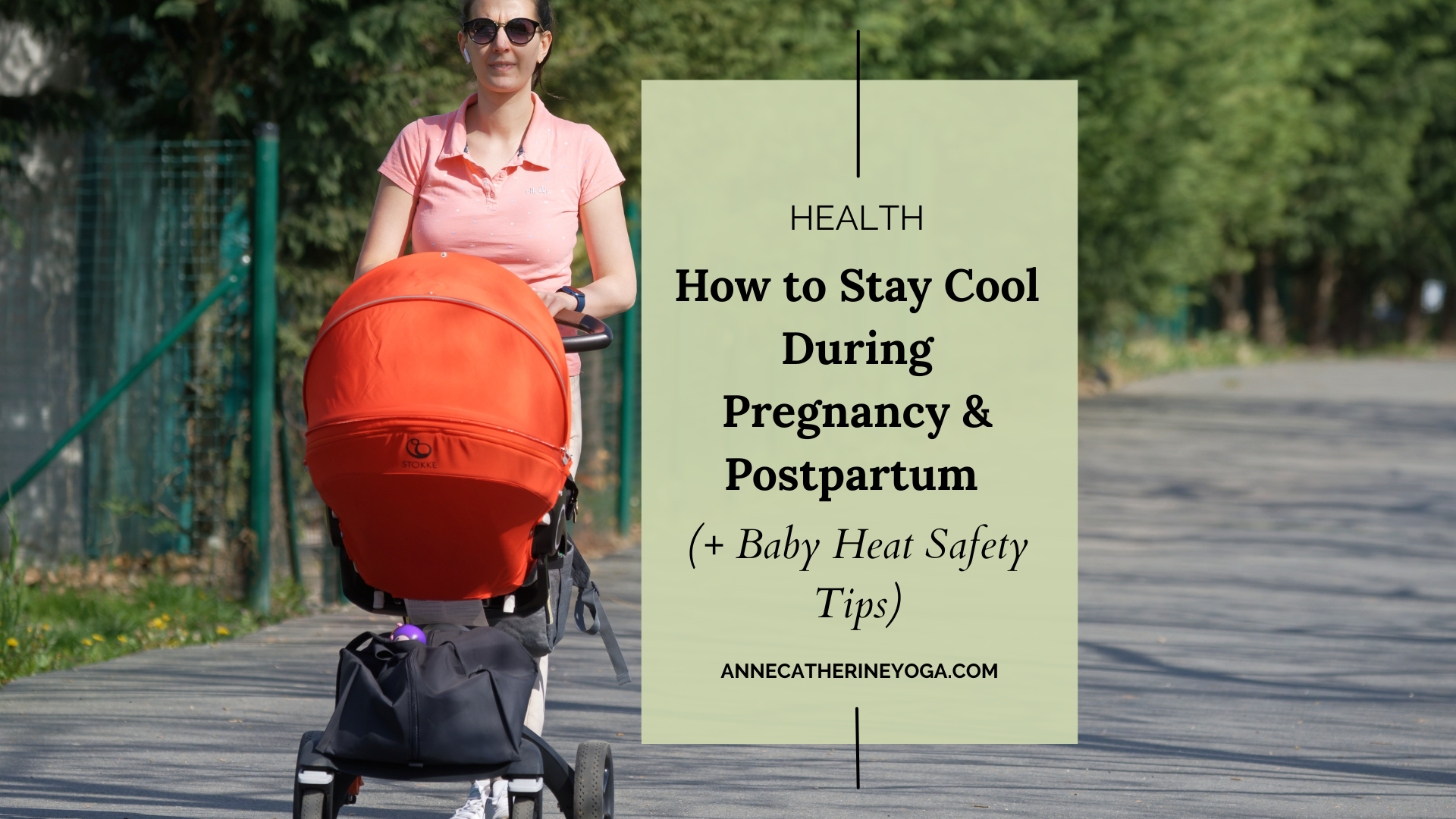
The Stroller Cover Issue Many Parents Don’t Know About
This is something I wish every parent was told.
Research and pediatric safety organizations have repeatedly warned that placing blankets or covers over strollers can significantly increase trapped heat and reduce airflow around a baby.⁵
Even lightweight muslin covers can:
trap warm air
reduce ventilation
increase internal stroller temperature
make overheating happen more quickly
Most parents use stroller covers with loving intentions:
blocking sunlight
helping baby nap
creating privacy
protecting from wind
But unfortunately, heat can build underneath very quickly — even on days that do not feel extremely hot outside.
Safer approaches include:
prioritizing airflow
using shade instead of covering the stroller
dressing baby lightly
using stroller fans safely
checking baby frequently for signs of overheating
Signs a Baby May Be Overheating
Watch for:
flushed cheeks
damp hair
sweating
warm chest or back
rapid breathing
unusual fussiness
lethargy
fewer wet diapers
Babies should never feel sweaty or excessively hot on the chest or back.
If you suspect overheating:
move baby into a cooler environment
remove extra layers
offer feeds
monitor closely
seek medical care if symptoms are severe or persistent
When to Seek Medical Care
Contact your healthcare provider or seek urgent medical care if a pregnant or postpartum mother experiences:
persistent dizziness or fainting
confusion
contractions triggered by heat
inability to keep fluids down
signs of severe dehydration
decreased fetal movement
chest pain
difficulty breathing
Seek immediate medical attention for a baby with:
extreme lethargy
difficulty waking
breathing concerns
fever
signs of dehydration
persistent overheating symptoms
Quick Heat Safety Checklist
During Pregnancy & Postpartum
Carry water everywhere
Avoid peak heat hours
Wear breathable fabrics
Rest often
Use shade intentionally
Listen to early warning signs
For Babies
Never leave baby in a parked car
Avoid covering strollers with blankets
Dress baby lightly
Prioritize airflow
Monitor for flushed skin or sweating
Check chest/back temperature frequently
Cooling Down Is Not Weakness
I think many mothers quietly feel pressure to keep going no matter how uncomfortable they are.
To stay outside longer.
Finish the outing.
Push through the heat.
Keep everyone else comfortable first.
But pregnancy and postpartum are seasons where honoring the body matters deeply.
Cooling down is not weakness.
Seeking shade is not laziness.
Resting is not “being dramatic.”
It is wisdom.
It is care.
It is understanding that your body is already doing extraordinary work beneath the surface.
And you do not need to earn rest by overheating first.
Pregnancy and postpartum ask so much of the body, yet many women are expected to navigate these seasons with very little support.
If you're looking for evidence-informed guidance, movement that honors your changing body, and a community that understands what you're experiencing, I'd love to support you.
I offer prenatal yoga, postpartum yoga with baby, private sessions, and doula support for families throughout Lafayette, Boulder County, and surrounding communities.
You don't need to have it all figured out. You don't need to be "good at yoga." You simply deserve support.
Explore current classes and offerings here.
References
American College of Obstetricians and Gynecologists (ACOG). Physiological changes during pregnancy and hydration guidance.
Mayo Clinic. Pregnancy body temperature and increased metabolic demands.
Centers for Disease Control and Prevention (CDC). Heat exposure and pregnancy health considerations.
American Academy of Pediatrics (AAP). Infant temperature regulation and overheating guidance.
Swedish stroller heat study and pediatric safety recommendations regarding stroller covers and airflow.
This article is for educational purposes only and is not medical advice. Always consult your healthcare provider regarding questions about breastfeeding, nutrition, postpartum recovery, or your individual health. If you found this article helpful, you're welcome to share it. If you're sharing it with clients or students, please credit Anne Catherine Yoga. In the spirit of yoga, we practice both ahimsa (non-harming) and asteya (giving proper attribution to the work of others).
