

Your Calm Shapes Your Baby’s Brain: How Nervous System Regulation Supports Infant Development (and Sleep)
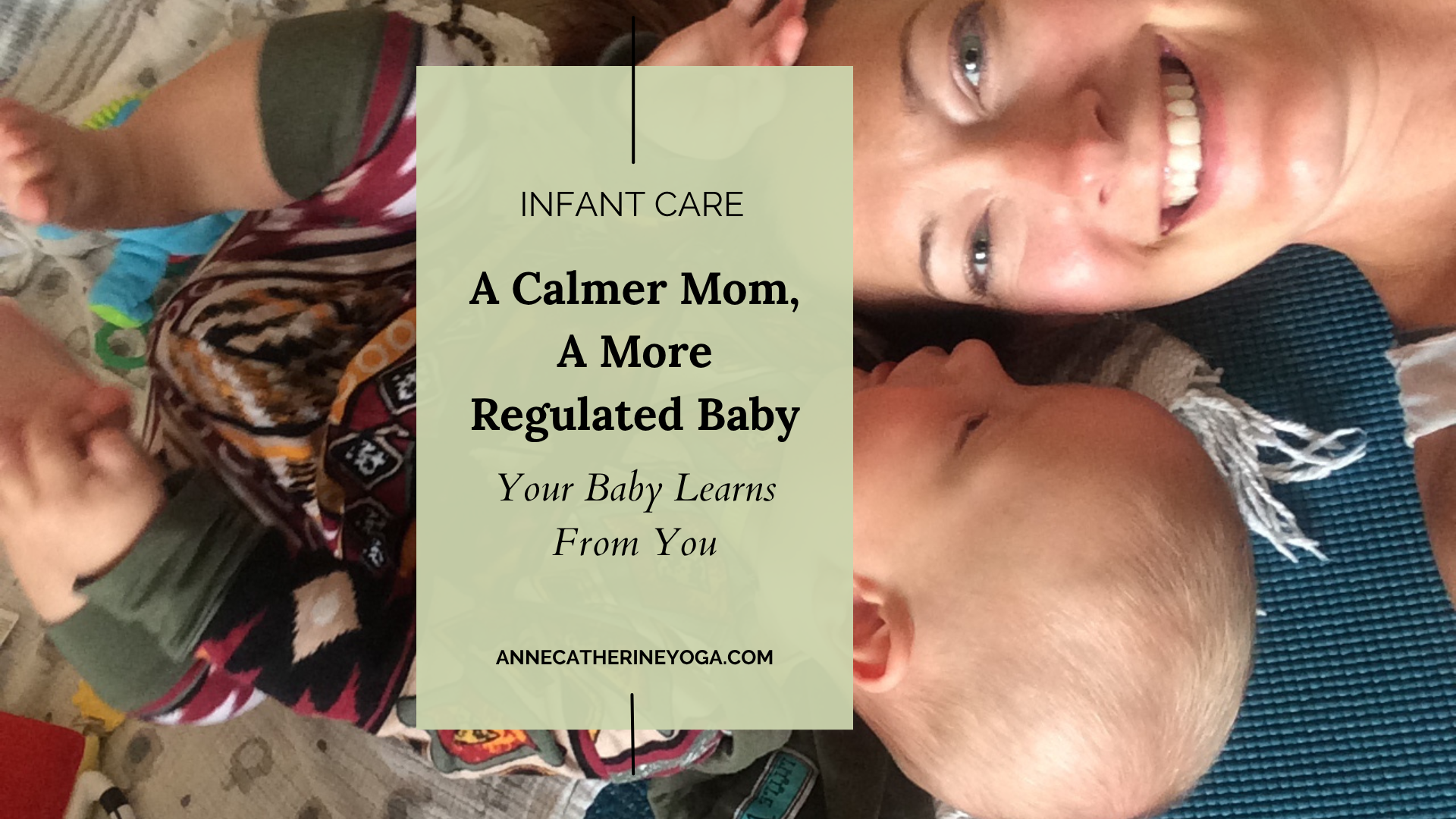
Babies learn to regulate their nervous systems through co-regulation with their caregiver
A calm, responsive mother supports baby’s brain development, stress response, and emotional health
Maternal stress can directly impact infant physiology and behavior
Yoga with baby supports infant development by helping moms regulate their own nervous systems
Supporting yourself is one of the most powerful ways to support your baby
Your Baby Is Learning How to Feel Safe—Through You
When we think about infant development, we often focus on milestones:
rolling, crawling, sleep patterns, feeding schedules.
But underneath all of that is something even more foundational:
Your baby is learning how to feel safe in their body.
And they learn that through you.
This process is known as co-regulation—the dynamic exchange between caregiver and infant where the baby relies on the adult nervous system to find stability and calm. In the early months, babies are not capable of self-regulation. Their nervous systems are still developing.
So instead, they borrow yours.
Your breath
Your tone of voice
Your touch
Your presence
These become the blueprint for how their nervous system learns to function.
The Science of Co-Regulation and Infant Development
Research consistently shows that caregiver regulation plays a direct role in infant development:
Infants of responsive, regulated caregivers demonstrate healthier physiological regulation, including improved heart rate variability and vagal tone
Co-regulated interactions shape the development of the infant’s autonomic nervous system
Affectionate touch supports bonding, immune function, and emotional regulation
Maternal stress is associated with increased infant distress and dysregulation
(Source examples: Feldman, 2007; Moore et al., 2016; Frontiers in Psychiatry, 2021; PMCID: PMC7873991)
This means:
Your baby’s stress response is not developing in isolation.
It is being shaped—moment by moment—through relationship with you.
Why Nervous System Regulation Matters for Baby
A well-supported nervous system becomes the foundation for:
Emotional resilience
Social connection and bonding
Learning and attention
Digestive function
Sleep regulation
Early markers like vagal tone have even been linked to long-term growth and socio-emotional development.
So when we talk about supporting baby’s development, we are not just talking about activities.
We are talking about how their body learns to:
handle stress
recover from overwhelm
feel safe in connection
The Missing Piece: Supporting the Mother
Here’s what often gets overlooked:
You cannot consistently regulate your baby
if your own nervous system is overwhelmed.
And yet, many new moms are taught to focus entirely on their baby’s needs—while quietly running on empty.
Trying to optimize:
sleep
feeding
development
…without support for themselves.
But your wellbeing is not separate from your baby’s wellbeing.
It is foundational to it.
How Yoga with Baby Supports Infant Development
Yoga with baby is not just about movement or “getting back into your body.”
It is a powerful way to support co-regulation.
When you practice:
slow, intentional breathing
gentle, functional movement
present-moment awareness
connection to your body
Your nervous system begins to settle.
And your baby experiences that in real time.
Whether they are:
in your arms
resting beside you
feeding during class
or simply observing
They are absorbing:
a steady heartbeat
rhythmic breath
calm, predictable movement
emotional safety
These shared experiences support:
nervous system development
bonding and attachment
emotional regulation
physiological stability
In other words:
You are practicing nervous system regulation together.
Does This Help Baby Sleep?
Sleep is one of the biggest concerns for new parents.
And while there is no single solution, here’s what we know:
Sleep is deeply connected to the nervous system.
A baby who feels:
safe
regulated
connected
…is more likely to:
settle more easily
transition between sleep cycles
recover from disruptions
And for you?
Even with normal infant night waking, a more regulated nervous system can help you:
fall back asleep more easily
feel less overwhelmed during the night
move through your days with more steadiness
A Gentle Reframe
Supporting your baby’s development is not only about what you do for them.
It is also about how you care for yourself in their presence.
When you:
pause
breathe
move slowly
receive support
You are not stepping away from your role as a mother.
You are deepening it.
Final Thoughts: Your Calm Is Not Extra—It’s Essential
You are your baby’s first environment.
Their first rhythm.
Their first sense of safety.
Your calm is not a luxury.
It is a form of care.
And in this season, caring for yourself and caring for your baby
are not separate things.
They are the same practice.
Support for Your Journey
If you are looking for a space to support both your baby’s development and your own wellbeing, my Postpartum Yoga with Baby classes are designed for exactly this.
These classes offer:
trauma-informed, nervous system–aware guidance
functional movement for postpartum recovery
space for babies to feed, sleep, or be held
a calm, supportive community of mothers
You don’t have to choose between caring for your baby and caring for yourself.
You can do both—together.
This article is for educational purposes only and is not medical advice. Always consult your healthcare provider regarding questions about breastfeeding, nutrition, postpartum recovery, or your individual health. If you found this article helpful, you're welcome to share it. If you're sharing it with clients or students, please credit Anne Catherine Yoga. In the spirit of yoga, we practice both ahimsa (non-harming) and asteya (giving proper attribution to the work of others).
